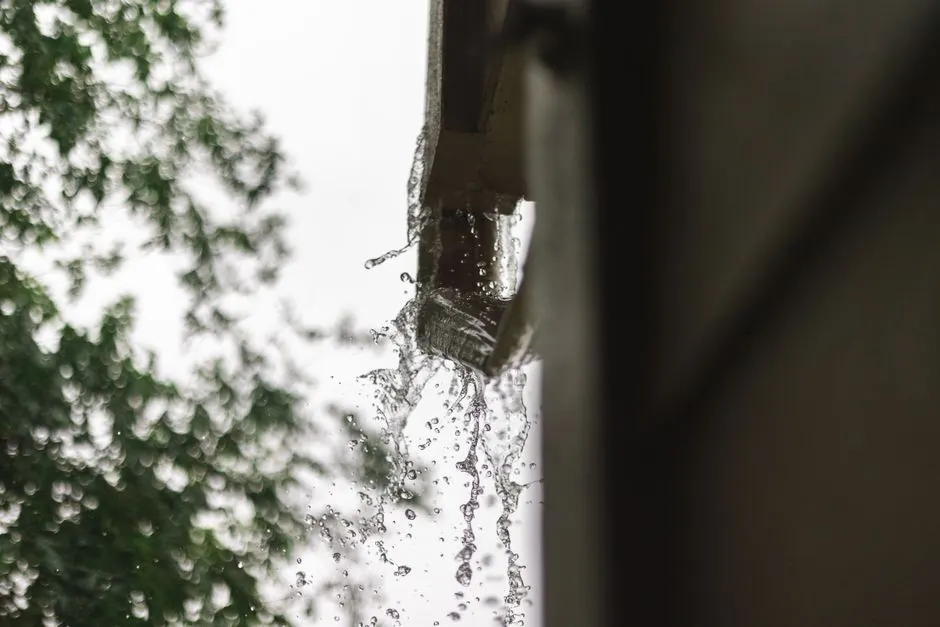
Water pooling around your Werribee home's foundation is almost always roof water that never made it into the stormwater system - blocked gutters, a broken downpipe, or a discharge point that dumps water straight back against the slab. Fix the gutter line and the puddle usually disappears within a week of dry weather. Leave it, and you are looking at cracked render, rising damp, and a footing repair bill that starts in the thousands.
Why is water pooling around your Werribee home's foundation specifically? Because most of the housing stock here sits on reactive clay, and Werribee's rainfall arrives in short, heavy bursts rather than gentle all-day drizzle. That combination punishes any gutter system that is even slightly compromised. Below we walk through how to trace the source, what it costs to fix in 2026, and when it is time to hand it to someone with a ladder and a camera.
The short answer: your roof water has nowhere to go
Water pooling around a foundation in Werribee is a drainage failure, not a rainfall problem. A typical 200-square-metre Werribee roof sheds roughly 160 litres of water for every 10mm of rain. All of it lands in your gutters and is supposed to travel through downpipes, then underground drains, then out to the street or a legal point of discharge. When any link in that chain blocks or breaks, the water finds the path of least resistance - and that path is usually the base of your walls.
Gutter drainage problems in Werribee Victoria tend to show up in three places: the gutter itself (full of leaves, silt, or a collapsed section), the downpipe (blocked at the top or disconnected at the bottom), or the underground stormwater line (root intrusion, crushed pipe, or a blocked pit). We find the first two on roughly eight out of ten call-outs. The third needs a camera inspection.
If you want the whole job handled by people who do this every week across the western suburbs, our Gutters Cleaning Werribee team covers cleaning, repairs, and drainage in one visit.
How to trace where the water is actually coming from
Tracing the source takes about twenty minutes and a garden hose, and it saves you paying someone to guess. Do it on a dry day, not during rain.
- Watch the downpipes during the next downpour. If water sheets over the gutter edge instead of running down the pipe, the gutter or the outlet is blocked.
- Run a hose into the gutter at the high end. Follow the water. If it backs up within a metre, you have a blockage. If it disappears but reappears at the base of the wall, the downpipe is disconnected underground.
- Check the discharge point. Water should exit at the street kerb, a stormwater pit, or a legal point of discharge - never onto your own garden bed next to the slab.
- Look at the ground slope. Werribee blocks are mostly flat. If the soil around the perimeter sits lower than the surrounding yard, water will collect there no matter how good your gutters are.
Nine times out of ten, step two tells you everything. A gutter that will not drain is a gutter that is overflowing onto your foundation every time it rains.
Why is water pooling around my house in Werribee after heavy rain?
Water pooling after rain in a Werribee home is caused by the volume of water arriving faster than the drainage can carry it away. Werribee gets its rain in bursts - 15mm in an hour is common in spring and early summer - and a half-blocked gutter simply cannot move that volume. The water overtops the front edge, runs down the fascia, and lands in a concentrated line along the wall.
There are four causes we see repeatedly:
- Leaf and silt build-up. A 20mm layer of compacted leaf litter across a 10-metre gutter run holds enough water to overflow in moderate rain.
- Blocked or undersized downpipes. One 90mm downpipe handles about 200 square metres of roof in ideal conditions. Add a 45-degree bend and a blocked grate and that capacity drops by half.
- Failed gutter joints and rust. Older Werribee homes with galvanised or early Colorbond gutters often have joints that have let go. Water drips straight down the wall.
- Blocked underground stormwater. Tree roots and settled silt block the buried line. The downpipe looks fine, but the water has nowhere to go and backs up to the lowest point - usually the base of the nearest wall.
Stormwater pooling around Werribee homes is also common on newer estates where the legal point of discharge sits lower than the house. If your neighbour's block was cut down and yours was filled, your stormwater has to travel further and flatter, and any partial blockage shows up as a puddle.
The Werribee soil problem nobody warns you about
Most of Werribee sits on reactive clay - the same clay that cracks footpaths and jams doors in a dry summer. Reactive clay expands when it gets wet and shrinks when it dries. When water pools against a slab or strip footing for weeks at a time, that clay swells on one side of the house only. The result is differential movement: cracks in brickwork, sticking windows, and in bad cases, a footing that needs underpinning.
We have seen this most often in the older streets around Gutters Cleaning in Werribee City Centre, where post-war homes sit close to established street trees and the gutters have not been cleaned in years. The trees drop leaves into the gutter, the gutter overflows, and the clay along the north wall stays wet all winter. By the following summer it has dried and shrunk, and the cracks appear.
The fix is not to re-landscape the yard. It is to get the roof water away from the footing and keep it away. That is a gutter and drainage job, not a concreting job.
How to fix water pooling around your foundation in Werribee
Fixing water pooling around a foundation in Werribee Victoria follows a fixed order: clear the gutters, confirm the downpipes flow, then check the underground line. Skipping straight to drainage grates or agi pipes without fixing the gutters is the most common waste of money we see.
Step 1: Clear and flush the gutters
A full gutter clean on a standard single-storey Werribee home takes our team about 90 minutes and removes the leaf litter, silt, and any moss that has taken hold. We flush every outlet with a hose to confirm flow before we pack up. Typical 2026 pricing for a single-storey clean in this area runs $180 to $320 depending on roof height, gutter length, and how long it has been since the last clean.
Step 2: Repair or replace failed sections
Rusted sections, sagging runs, and separated joints all need fixing before the next rain. Gutter repair contractors in Werribee handle this with a reseal and re-pitch, or a section replacement if the metal has gone. If your gutters are 25 years old and rusting through in multiple spots, replacement is usually the cheaper long-term call - our gutter replacement contractors Werribee team can quote that on the same visit.
Step 3: Confirm the downpipes discharge correctly
Every downpipe must discharge to a legal point of discharge - the kerb, a stormwater pit, or an approved soak pit. A downpipe that empties onto the garden bed next to the slab is the single most common cause of foundation water pooling we find. Downpipe drainage contractors Werribee can extend or re-route the line so the water leaves the property.
Step 4: Clear the underground stormwater line
If the downpipe flows but the water backs up, the buried line is blocked. A high-pressure jet and camera inspection clears roots and silt and confirms the pipe is intact. Underground gutter drain cleaning in Werribee is a same-day job in most cases and costs $350 to $650 depending on run length and access.
If you have already had the gutters cleaned and the puddle is still there, the problem is almost certainly underground. That is when we bring in the camera.
Common mistakes we see on Werribee properties
Most of the foundation water damage we inspect was preventable, and it usually traces back to one of these five mistakes.
- Cleaning gutters once every three years. In Werribee, with the street trees and the summer storms, twice a year is the realistic minimum. Once in late autumn after the leaves drop, once in early spring before the storm season.
- Hosing the gutter from the ground. A garden hose from ground level pushes water into the gutter but does not remove the compacted silt at the bottom. It looks clear and it is not.
- Ignoring the downpipe outlet. Homeowners check the gutter and forget the bottom of the pipe. That is where half the problems live.
- Paving over the puddle. Laying pavers or pouring a slab over a wet spot traps the water against the footing and makes the problem worse.
- Fitting gutter guards and never checking underneath. Guards reduce leaf entry but fine silt still gets through. An annual check is still needed.
If you are weighing up guards, our gutter guards contractor Werribee team can tell you honestly whether they will help on your roof or just add a maintenance step.
When to call a professional
Call a professional when the water returns after a gutter clean, when you can see cracked render or a damp patch inside the wall, or when the pooling is within a metre of the slab and has been there more than a fortnight. Those are the three signals that the problem is below ground or structural, and no amount of DIY gutter work will fix it.
Our team at Gutters Cleaning Werribee handles the whole chain - clean, repair, re-route, and clear the underground line - so you are not coordinating three different trades. We tell you what we find, what it costs, and what we are doing before we start. If the gutters are fine and the issue is elsewhere, we will say so.
Frequently Asked Questions
Why is water pooling around my foundation in Werribee?
Blocked gutters or a failed downpipe are the cause in about 80% of cases. Roof water overflows at the wall instead of discharging to the street. Reactive clay soil then holds that moisture against the footing. A gutter clean and downpipe check usually resolves it within one dry week.
Can blocked gutters cause water pooling in Werribee, Victoria?
Yes. A 20mm layer of compacted leaf litter across a 10-metre gutter run overflows in moderate rain. That water lands in a concentrated line along the foundation. Cleaning the gutters and flushing the outlets removes the source in under two hours on most single-storey homes.
How do I stop water pooling around my house in Werribee?
Clear the gutters, confirm every downpipe discharges to the kerb or a stormwater pit, and check the underground line for blockages. Re-pitch any sagging gutter runs. If the puddle persists after all three steps, the buried stormwater line needs a camera inspection and jet clean.
When should I call a gutter contractor for pooling water in Werribee?
Call when the water returns within a week of cleaning, when you see cracked render or a damp internal wall, or when pooling sits within a metre of the slab for more than two weeks. Those signs point to an underground blockage or a footing issue that needs professional diagnosis.
How much does it cost to fix water pooling in Werribee in 2026?
A standard gutter clean runs $180 to $320. Downpipe re-routing or repair adds $150 to $400. An underground stormwater jet and camera inspection costs $350 to $650. Most foundation pooling jobs are resolved for under $700 total, well below the cost of footing repairs.
Get help with Gutters Cleaning in Werribee
If water is pooling around your Werribee foundation, we can trace it, clear it, and stop it coming back - usually in a single visit. Call Gutters Cleaning Werribee on 0390699366 and we will book a time that suits you.